- Jinhua Sigma Industrial And Trading Co., Ltd.
- 86-13566763606
- info@jhsigma.com

The Best Industrial
Solution Provider
Which Outdoor Furniture Needs the Least Maintenance, and How Should I Clean It?
What Is the Most Low-Maintenance Outdoor Furniture Material?
1. Powder-Coated Aluminum: Best Overall for Easy Care
Powder-coated aluminum is often the best all-round choice for buyers who want attractive outdoor furniture without frequent refinishing. Aluminum itself does not rust, while a well-applied powder coating helps protect the surface from moisture, sunlight, and everyday wear.
Its main advantages include:
-
No regular oiling or sealing
-
Easy cleaning with mild soap and water
-
Lower weight for easier rearrangement
-
Good resistance to humid and rainy conditions
-
Broad design flexibility for sofas, dining sets, loungers, and daybeds
Quality still matters. Buyers should check that welds are smooth, frame openings are sealed or designed to drain, and the powder coating is even around joints and edges. In coastal locations, regular fresh-water rinsing is important because salt deposits can affect coatings, joints, and hardware over time.
2. HDPE and High-Quality Synthetic Wicker: Very Easy to Maintain
HDPE-based furniture and premium synthetic wicker do not require painting, staining, or oiling. They are practical for pool areas, family patios, and hospitality projects because dirt can usually be removed with a gentle wash.
Look for UV-stabilized material, consistent weaving tension, and a strong internal frame. Low-quality synthetic wicker may become brittle, fade, or split after prolonged sun exposure, so the material specification matters more than appearance alone.
3. Outdoor Rope: Low Maintenance When the Material Is Correct
Outdoor rope furniture can be easy to care for when the rope is specifically engineered for exterior use. High-quality synthetic rope should be UV-resistant, quick-drying, and firmly tensioned around a corrosion-resistant frame.
Its textured surface can hold dust more easily than smooth aluminum, so occasional cleaning with a soft brush is useful. Avoid aggressive scrubbing, which can roughen the fibers.
4. Teak: Durable, but Not Always the Lowest-Maintenance Choice
Teak is naturally durable and well suited to outdoor use. It can be left untreated and will gradually develop a silver-gray patina. In that condition, care is relatively simple: gentle cleaning is usually enough.
However, teak requires more maintenance if you want to keep its original warm golden color. That may involve periodic cleaning and the use of an appropriate teak protector. Heavy oiling is not always necessary and can attract dirt or encourage uneven coloring if applied incorrectly.
5. Steel and Iron: Strong, but Usually More Demanding
Steel and wrought iron can be durable, but damaged coatings may expose the metal to corrosion. These materials generally require more frequent inspection, especially in humid, rainy, or coastal environments. Any chips or scratches should be repaired before rust spreads.
Quick Comparison: Maintenance by Material
| Material | Maintenance level | Routine cleaning | Main concern | Best suited for |
|---|---|---|---|---|
| Powder-coated aluminum | Very low | Mild soap, water, soft cloth | Coating damage and salt buildup | Most patios, villas, hotels, humid climates |
| HDPE furniture | Very low | Soap, water, soft brush | Heat expansion and surface staining | Pools, family patios, commercial use |
| Synthetic wicker | Low | Vacuum or brush, then wash gently | UV quality and dirt in the weave | Covered or open-air lounge areas |
| Outdoor rope | Low | Soft brush and mild soap | Dust in fibers and slow drying if poorly designed | Modern lounge and dining furniture |
| Teak | Low to moderate | Gentle wash; optional protector | Color change and surface weathering | Premium residential and resort spaces |
| Steel or iron | Moderate to high | Wash and inspect coating | Rust after scratches or chips | Dry climates or protected areas |
How Should I Clean Low-Maintenance Outdoor Furniture?
For routine cleaning, use the gentlest effective method. In most cases, you need only:
-
A bucket of lukewarm water
-
A small amount of pH-neutral soap
-
A microfiber cloth or soft sponge
-
A soft-bristle brush for textured surfaces
-
A garden hose with low water pressure
Basic Cleaning Method
-
Remove loose dust and leaves. Use a dry cloth, soft brush, or vacuum with a brush attachment.
-
Mix a mild cleaning solution. Add a small amount of pH-neutral soap to lukewarm water.
-
Test a hidden area. This is especially important for colored finishes and performance fabrics.
-
Wash gently. Wipe smooth frames with a cloth and use a soft brush on wicker or rope.
-
Rinse completely. Soap residue can attract dirt or leave marks.
-
Allow the furniture to dry. Stand cushions upright and keep zippers or vents facing downward where appropriate.
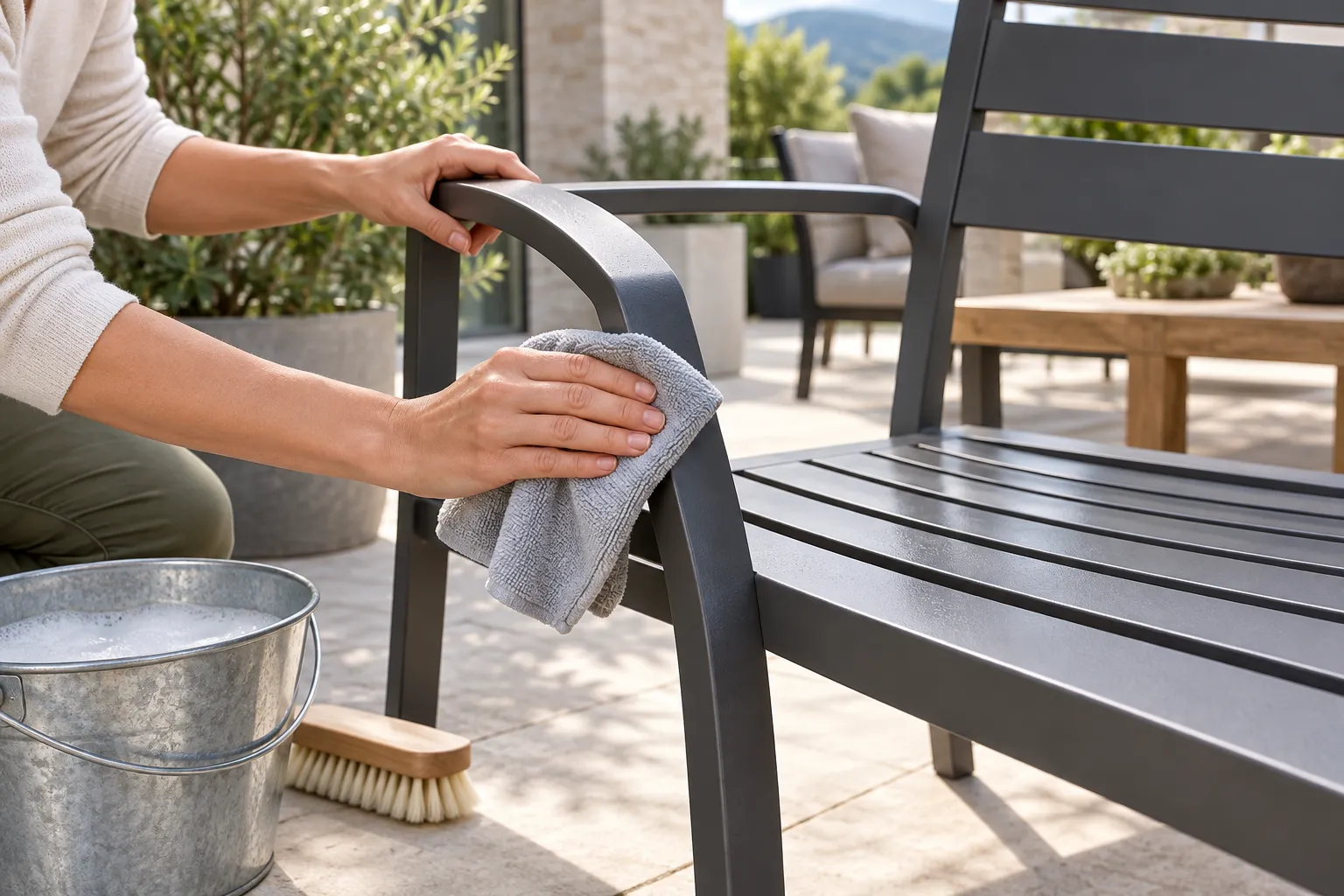
Cleaning Instructions by Material
How to Clean Powder-Coated Aluminum
Wipe the frame with mild soapy water and a soft cloth. Rinse with fresh water and dry it or allow it to air-dry. Near the ocean, rinse more often to remove salt deposits. Do not use steel wool, abrasive powders, strong alkaline cleaners, or chlorine-based chemicals unless the manufacturer specifically approves them.
How to Clean Synthetic Wicker or HDPE
Remove loose debris from gaps first. Apply mild soapy water with a sponge or soft brush, working along the weave rather than forcing the bristles against it. Rinse gently. Avoid placing high-pressure nozzles close to woven material because they may loosen or damage it.
How to Clean Outdoor Rope
Brush away dust, then clean the rope with diluted mild soap and a soft brush. Rinse thoroughly so detergent does not remain inside the fibers. Let the furniture dry in a ventilated place before covering it.
How to Clean Teak
Wash teak with a soft brush, mild soap, and water, following the grain. Avoid aggressive pressure washing because it can raise the grain and create a rough surface. If you want to preserve the original color, use a teak-care product recommended for outdoor furniture and follow its application instructions.
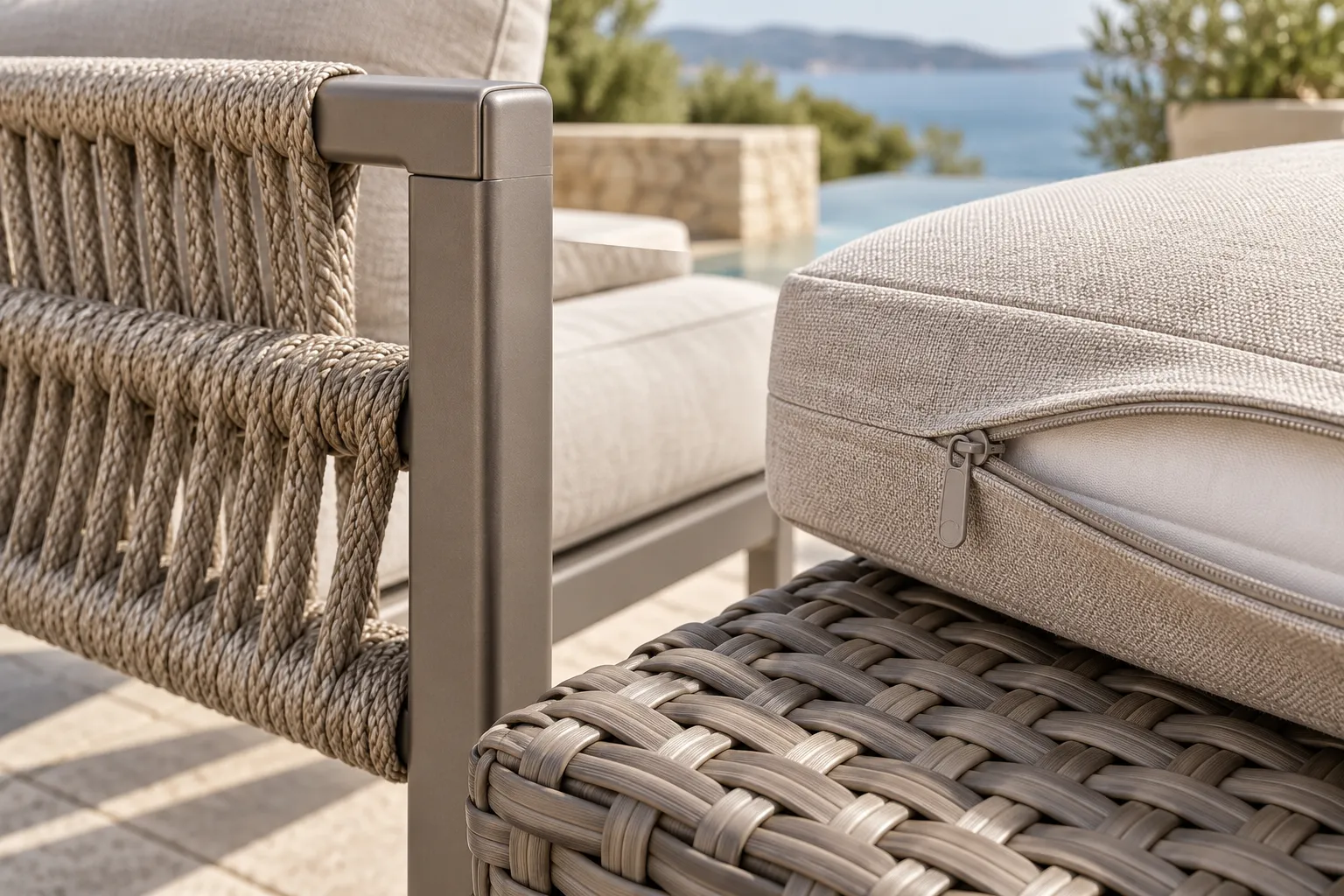
How to Clean Outdoor Cushions
Check the fabric care label first. For removable covers, brush or vacuum loose dirt before washing. Spot-clean small marks using mild soap and water. Rinse well and dry completely before storage. Do not put covers in a washing machine unless the care instructions allow it.
For easier long-term care, choose solution-dyed performance fabrics, removable covers, ventilated cushion construction, and quick-dry foam where frequent rain is expected.
What Should You Avoid When Cleaning Outdoor Furniture?
Avoid these common mistakes:
-
Using bleach or strong solvents without checking the manufacturer’s instructions
-
Scrubbing powder coating or fabric with abrasive pads
-
Holding a pressure washer close to joints, rope, wicker, or wood
-
Covering furniture while it is still damp
-
Allowing leaves, sunscreen, bird droppings, salt, or food stains to remain for long periods
-
Ignoring scratches, loose weaving, blocked drainage holes, or corroding hardware
Prompt cleaning is usually easier and safer than using a stronger chemical after a stain has set.
How Often Should Outdoor Furniture Be Cleaned?
A practical schedule depends on exposure:
-
Light use or covered terrace: Dust regularly and wash every one to three months.
-
Poolside or dining area: Wipe spills immediately and clean surfaces every few weeks during the season.
-
Coastal environment: Rinse frames and hardware with fresh water every one to two weeks, or more often during heavy salt exposure.
-
After storms or long storage: Inspect joints, drainage, fasteners, covers, and cushions before use.
-
Before covering: Make sure every component is clean and completely dry.
These are general guidelines. The product care instructions should take priority because finishes, fabrics, foam, and hardware vary.
How Can I Choose Furniture That Will Stay Easy to Maintain?
Before purchasing, ask the supplier for more than a material name. Request details about:
-
Frame construction: Is the aluminum wall thickness suitable for the product and intended use?
-
Surface treatment: Is the finish outdoor-grade and evenly applied around welds and edges?
-
Hardware: Is it corrosion-resistant and appropriate for the installation environment?
-
Drainage: Can rainwater escape from frames and cushions?
-
Fabric and foam: Are the covers removable, and is the inner construction designed to dry efficiently?
-
Replacement parts: Can cushions, covers, feet, or woven components be replaced?
-
Climate suitability: Has the complete specification been selected for sun, humidity, rain, frost, or coastal salt?
The easiest furniture to maintain is not simply the material that cleans fastest. It is a complete system designed for the climate and supported with clear care instructions.
What Does SIGMA Recommend?
For many residential, villa, hotel, and resort projects, SIGMA recommends powder-coated aluminum frames combined with exterior-grade rope or synthetic weave and removable performance-fabric cushions. This configuration balances design flexibility, comfort, weather resistance, and manageable routine care.
For clients who prefer natural wood, teak remains an excellent choice when its expected color change and care plan are understood from the beginning.
Founded in 2005, SIGMA provides one-stop indoor and outdoor furniture solutions for villas, hotels, resorts, and modern homes. Our team can help buyers compare materials, finishes, fabrics, construction details, and maintenance requirements according to the project location and intended use.
Planning an outdoor project? Share your layout, climate, preferred style, and usage requirements with SIGMA for a customized furniture proposal.
Website: https://www.furnituresigma.com/
Related News



Contact US
Product Information
Quantity
Unit
Piece
Support order samples, customization, wholesale direct, and complete payment. If the product you look for does not have corresponding customized content, pls fill out the form below to contact us, and we will reply ASAP.