- Jinhua Sigma Industrial And Trading Co., Ltd.
- 86-13566763606
- info@jhsigma.com

The Best Industrial
Solution Provider
How Can Buyers Verify Wood Species, Solid Wood Content, Plywood Quality, and Kiln Drying?

Why a wood species name is not enough
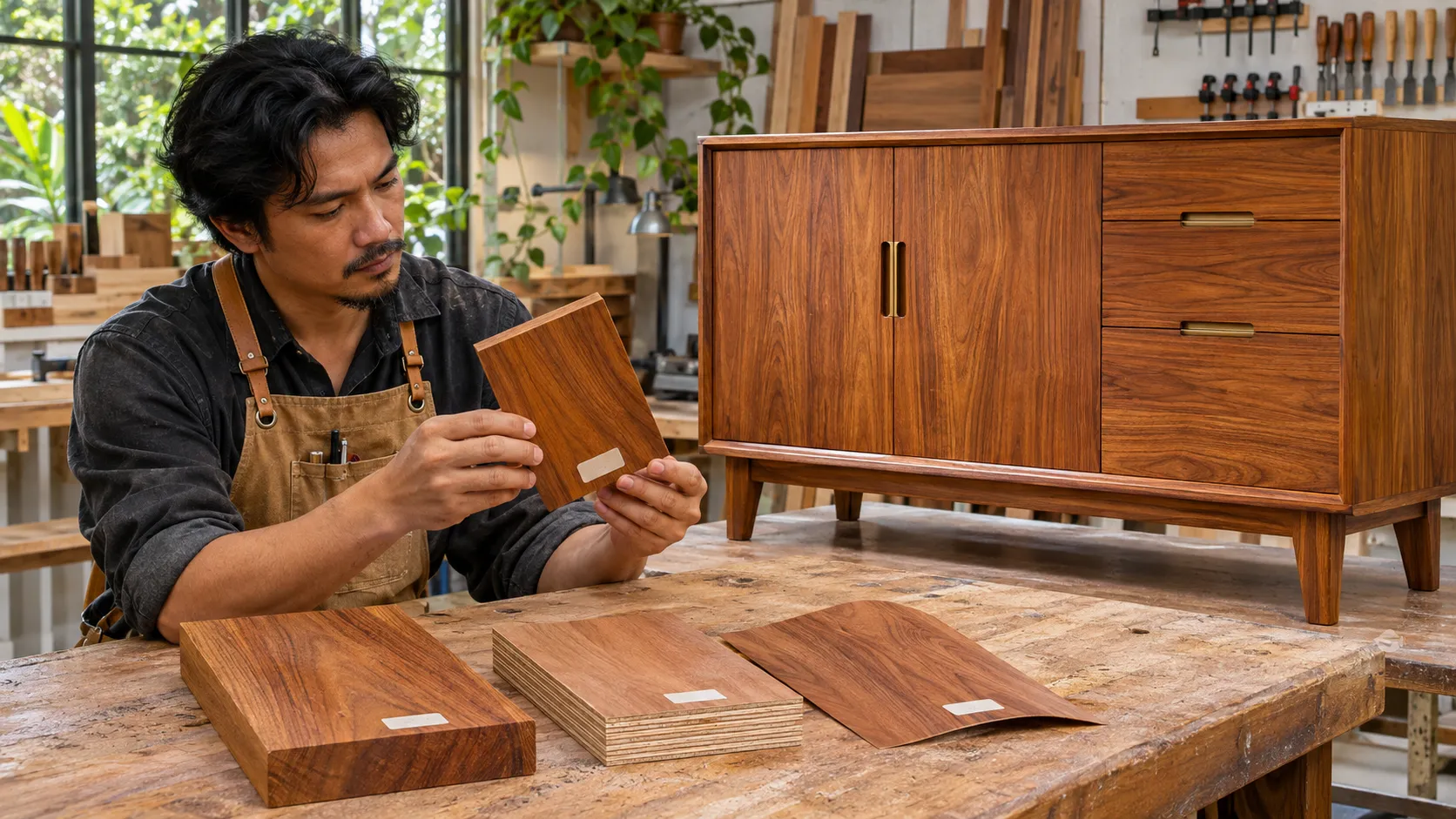
A listing described as “teak furniture” does not tell you which parts are teak. The visible surface, internal frame, drawer bottom, and back panel may use different wood materials for different purposes.
For each product, request a written component list. It should identify the wood species used in the legs, frame, top, doors, shelves, and panels, and distinguish solid wood furniture components from plywood or veneered components. If a supplier offers teak wood, ask which specific parts are solid teak and which, if any, use teak veneer.
A physical sample helps confirm color, grain, and finish. For larger orders, keep an approved sample and signed specification as the reference for production and inspection. Appearance alone cannot reliably establish every concealed material.
How to check solid wood content
Ask for an annotated drawing or bill of materials that names the material of each major component. Terms such as “solid wood frame” and “wood finish” describe different things; neither defines the construction of the entire piece.
| What to request | What it helps verify |
|---|---|
| Component-by-component material list | Where solid wood, plywood, and other materials are used |
| Final technical drawing | The location and dimensions of structural parts |
| Unfinished material samples or approved cutaway | The wood and panel construction beneath the finish |
| Production or inspection photos | Whether the agreed materials appear in the actual build |
Solid wood and engineered panels can both have appropriate roles in furniture construction. The useful question is whether the material in each location matches the approved design and intended use.
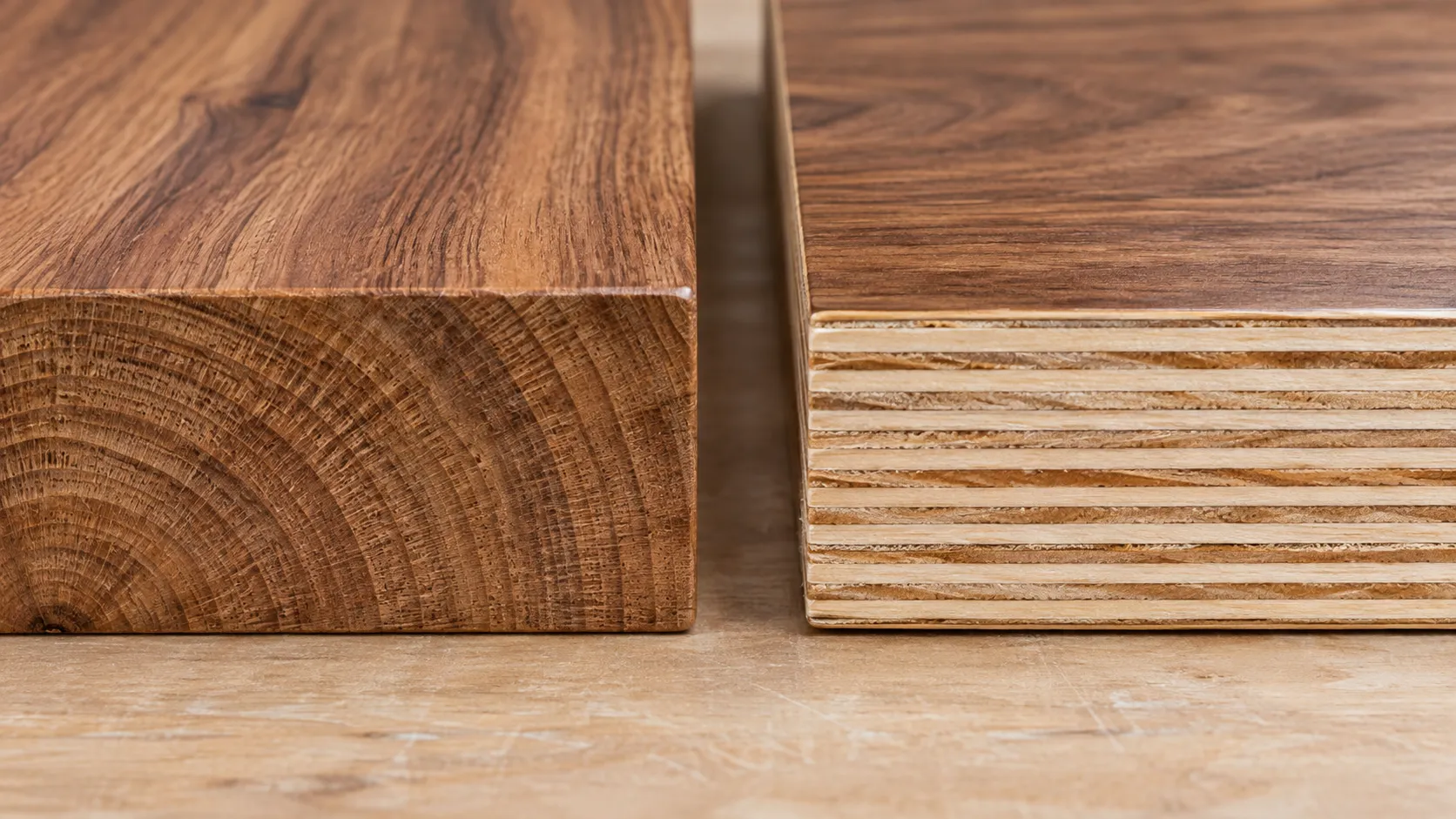
Alt text: Solid wood end grain beside a layered plywood panel with a finished veneer surface.
What indicates plywood quality?
Plywood quality involves more than panel thickness. Ask for the panel manufacturer and product designation, face and back veneer grade where applicable, core construction, adhesive or bond classification, nominal thickness, and intended use. Also inspect samples for visible core gaps, delamination, uneven faces, and poorly finished edges.
Grades must be interpreted within the standard or product system that defines them; a grade label on its own is not a universal furniture-quality score. APA, for example, explains that its plywood grade markings can identify face and back veneer grades and other product information. APA
For veneered furniture, request the veneer species and thickness and confirm the edge treatment. A well-finished edge protects the panel and gives buyers a clearer view of the intended construction. The specified thickness for a SIGMA project should be confirmed on its actual material sheet
How can buyers verify kiln-dried wood?
“Kiln-dried wood” describes a drying process, but it does not by itself prove that the wood has the right moisture content when furniture is assembled. Wood can regain moisture during storage or transport. Moisture control should therefore cover the material, storage conditions, and checks during production.
Ask the supplier for:
- The agreed moisture-content range for the wood species and destination environment.
- Kiln-drying or incoming-lumber records, if available for the batch.
- Moisture-meter readings from representative boards before machining or assembly.
- The measurement date, sampling locations, and meter method.
- Storage and acclimation practices before production.
The appropriate target depends on the product and where it will be used. The USDA Forest Products Laboratory notes that drying aims to bring wood close to the moisture content it will have in service, and that insufficient drying can contribute to problems such as shrinkage and warping. A universal moisture number should therefore not be copied into every furniture specification. fpl.fs.usda.gov

Alt text: Craftsperson using a moisture meter on a furniture board near stacked timber.
Approve the specification before mass production
A practical approval package brings the evidence together: final drawings, the component material list, labeled physical samples, plywood and veneer details, the agreed moisture-control requirement, and the approved finish. Record substitutions in writing and obtain buyer approval before production proceeds.
This process helps reduce misunderstandings about solid wood content, teak wood, plywood quality, and kiln drying. It also gives the inspection team a specific standard against which to compare the finished order.
Frequently asked questions
Does “teak veneer” mean the furniture is solid teak?
No. Teak veneer is a thin teak surface bonded to a substrate. Ask the supplier to identify the substrate and separately list any solid teak components.
Is plywood always lower quality than solid wood?
No. Suitability depends on panel construction, grade, bonding, edge finishing, and where the panel is used. Review the specified material for each component.
Is a kiln-drying statement sufficient proof of moisture control?
No. Request the agreed moisture-content requirement and representative measurement records taken at relevant production stages.
Discuss material options with SIGMA Furniture
SIGMA Furniture supports customized material selection according to product design and project requirements. Share your drawings, destination, intended use, and preferred appearance so the team can discuss an appropriate construction and prepare the material details for approval. Contact SIGMA Furniture.
Related News








Contact US
Product Information
Quantity
Unit
Piece
Support order samples, customization, wholesale direct, and complete payment. If the product you look for does not have corresponding customized content, pls fill out the form below to contact us, and we will reply ASAP.