- Jinhua Sigma Industrial And Trading Co., Ltd.
- 86-13566763606
- info@jhsigma.com

The Best Industrial
Solution Provider
How Should Buyers Compare Cushion Firmness, Foam Support, and Down Filling?

Quick answer: Buyers should select sofa cushions according to their preferred sitting feel and intended use. Foam generally provides more structured support, while down or blended fillings create a softer, more relaxed feel. Foam density, firmness, cushion thickness, internal layers, and the sofa support system should be evaluated together.
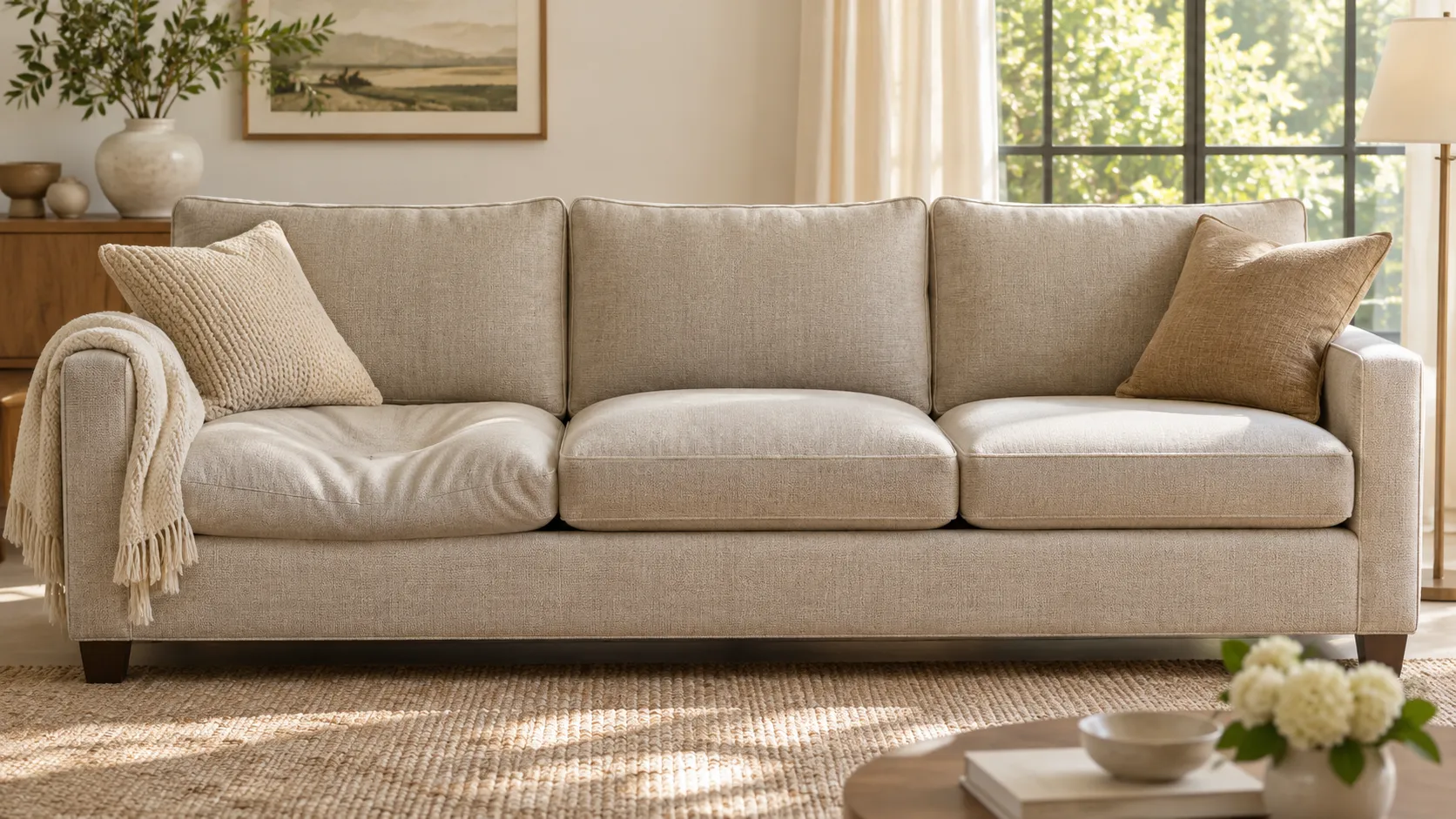
Why Sofa Cushion Comfort Is More Than Soft or Firm
When selecting upholstered furniture, buyers often focus on whether a cushion feels soft, medium, or firm. However, sofa cushion comfort depends on several connected factors:
- Cushion firmness
- Foam density
- Cushion thickness
- Internal filling materials
- Seat depth and seat height
- Webbing, springs, or other support beneath the cushion
- Intended use and personal comfort preferences
A cushion that feels comfortable to one person may feel too soft or too firm to another. Buyers should therefore evaluate the complete seating system instead of relying on a single specification.
What Does Cushion Firmness Mean?
Cushion firmness describes how much resistance a cushion provides when compressed.
| Firmness | Sitting experience | Suitable applications |
|---|---|---|
| Soft | Deeper sink-in feeling and relaxed comfort | Lounge sofas, media rooms and residential spaces |
| Medium | Balance between comfort and support | Living rooms, villas and hotel guest rooms |
| Firm | More upright and structured support | Reception areas, banquettes and commercial spaces |
These descriptions are subjective. The final sitting experience also changes according to cushion thickness, upholstery tension, foam layers, and the support structure below the seat.
Foam Density and Firmness Are Different
Foam density describes how much foam material is contained within a specific volume. Firmness describes how the foam feels when compressed.
A higher-density foam is not necessarily harder, and a lower-density foam is not necessarily softer. Two foam cushions may have similar density but different firmness levels.
When comparing foam cushions, buyers should request:
- Foam type
- Foam density
- Firmness or compression specification
- Number and thickness of foam layers
- Fiber or polyester wrapping
- Cushion dimensions
- Intended frequency of use
For SIGMA customized projects, the exact specification should be confirmed before production:
How Do Foam Cushions Feel?
Foam cushions normally provide structured support and a clearly defined shape. They are suitable for buyers who prefer:
- A tailored sofa appearance
- Stable sitting support
- Easier movement when standing up
- Less frequent cushion reshaping
- Consistent comfort across multiple furniture pieces
A single foam core can create an even sitting feel. Layered foam can combine a supportive center with softer comfort layers.
However, foam should not be evaluated separately from the sofa structure. Webbing, springs, frame design, cushion thickness, and fabric tension can all affect the final comfort level.
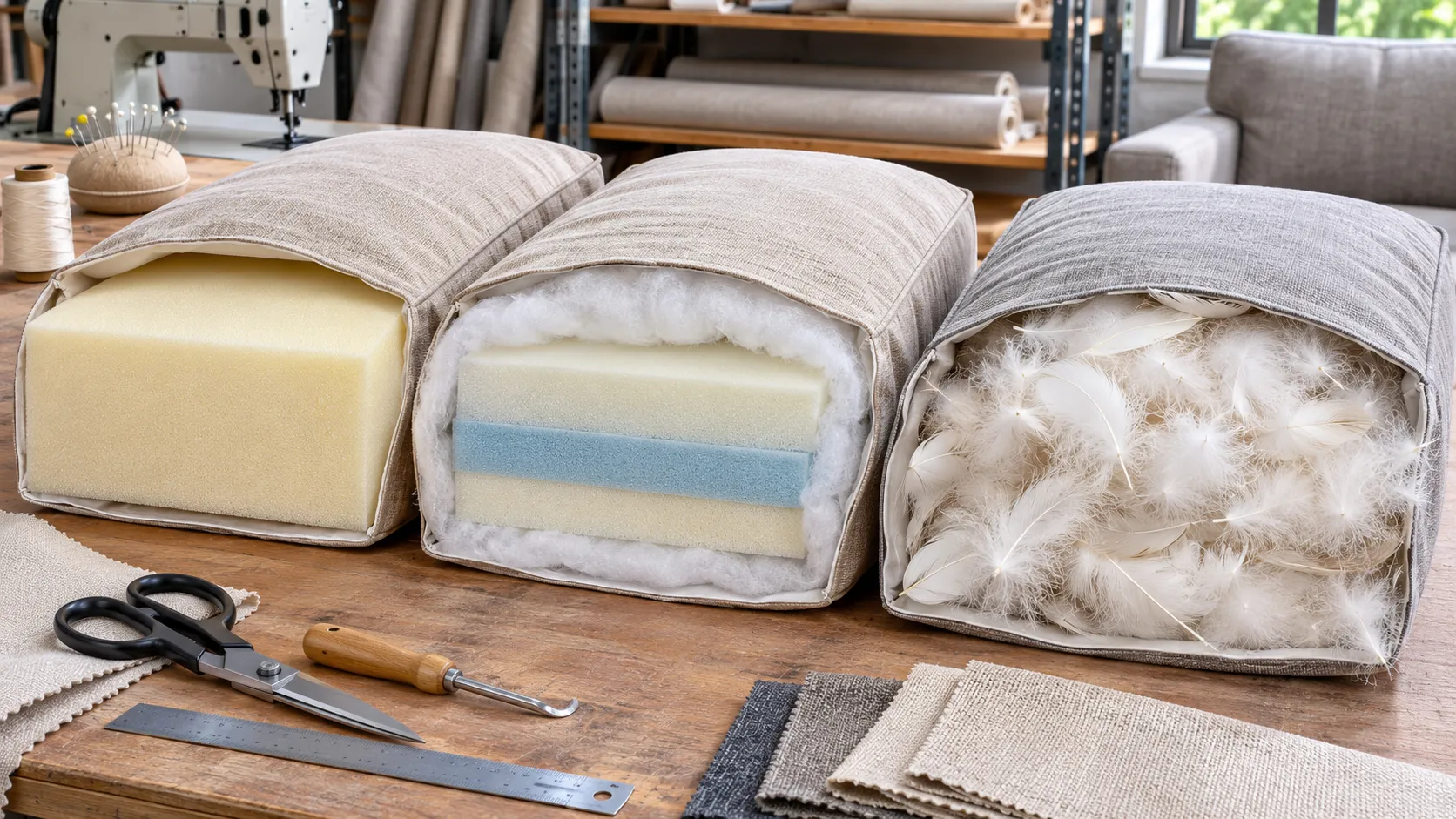
How Do Down-Filled Cushions Feel?
Down-filled cushions and feather-blend cushions generally provide a softer, fuller, and more relaxed sitting experience. They conform more easily to the body and are often used in deep lounge sofas.
Down or feather-blend cushions may suit buyers who prefer:
- A soft sink-in feeling
- A casual residential appearance
- Deep and relaxed seating
- Cushions that can be reshaped by hand
Because the filling moves and compresses during use, these cushions normally require more frequent fluffing, rotating, and reshaping.
Buyers should confirm:
- The type of down or feather used
- The filling composition
- Internal chamber construction
- Care and cleaning requirements
- Maintenance expectations
- Allergy-related preferences
What Is a Foam and Down Blend?
Many cushion filling materials combine a structured foam core with a softer outer layer. This construction aims to provide foam support with a more comfortable surface feel.
Common constructions include:
- Foam core with polyester fiber wrap
- Layered foam with a softer upper layer
- Foam surrounded by feather or down blend
- Compartmented filling around a structured center
The term “down blend” does not explain the complete construction. Buyers should request the actual filling proportions and internal structure.
Foam vs. Down vs. Blended Cushions
| Cushion type | Support | Sitting feel | Appearance | Maintenance |
|---|---|---|---|---|
| Foam | Structured | Medium to firm | Clean and tailored | Limited reshaping |
| Down or feather blend | Less structured | Soft and enveloping | Relaxed and full | Frequent fluffing |
| Foam with soft wrap | Balanced | Supportive with a softer surface | Moderately relaxed | Periodic reshaping |
| Layered foam | Customizable | Soft, medium, or firm | Controlled appearance | Depends on construction |
There is no universally superior filling. The right choice depends on comfort preferences, furniture use, desired appearance, and maintenance expectations.
Match the Cushion to the Intended Use
Residential Living Rooms
Medium-support foam or blended cushions can balance comfort and shape retention. Deeper seats and soft surface layers are suitable for relaxed family use.
Hotels, Resorts and Reception Areas
Frequently used furniture may require structured support, consistent specifications, and easier daily maintenance.
Media Rooms and Lounge Spaces
Soft or blended cushions can create a relaxed sitting position. Seat depth and back-cushion support should be considered together.
Dining Banquettes
Firmer and thinner cushions usually provide a more upright sitting position and make it easier to move in and out of the seat.
How to Compare Sofa Cushions Before Ordering
Buyers should:
- Define whether they prefer a soft, balanced, or firm sitting feel.
- Explain where and how frequently the furniture will be used.
- Request the cushion cross-section and filling specification.
- Confirm foam density and firmness separately.
- Review cushion thickness and internal layers.
- Ask about fluffing, rotation, cleaning, and replacement.
- Test a sample or prototype when possible.
- Approve the final cushion specification before production.
If an in-person test is unavailable, buyers can request compression videos, material samples, construction drawings, and written specifications.

Questions to Ask a Furniture Supplier
Before approving custom sofa cushions, ask:
- What filling materials are used?
- What are the foam density and firmness specifications?
- Is the cushion made from one foam core or multiple layers?
- Does it include fiber, feather, or down wrapping?
- What support system is installed beneath the cushion?
- How often should the cushion be rotated or reshaped?
- Are the covers removable?
- Can the cushion insert be replaced later?
- Are different firmness options available?
The confirmed answers should be included in the approved product specification.
Frequently Asked Questions
Is high-density foam always firm?
No. Foam density and firmness describe different properties. Buyers should review both specifications and consider the complete cushion construction.
Are down-filled cushions better than foam cushions?
They provide a different sitting experience. Down or feather-blend cushions are generally softer, while foam cushions provide more structured support.
Do down-filled cushions require more maintenance?
Yes. They usually require more frequent fluffing, rotating, and reshaping because the filling moves during use.
What cushion filling is suitable for frequently used sofas?
Supportive foam or a blended construction may be practical, depending on the required comfort, appearance, and maintenance plan.
Can sofa cushion firmness be customized?
Yes. SIGMA Furniture supports customized cushion options based on furniture design, comfort preferences, and project requirements.
Customize Sofa Cushion Comfort with SIGMA Furniture
SIGMA Furniture provides one-stop indoor and outdoor furniture solutions for villas, hotels, resorts, and commercial projects. Buyers can discuss cushion firmness, foam support, filling materials, seat dimensions, fabrics, and intended use before confirming a customized sofa specification.
Visit SIGMA Furniture to discuss your project requirements.
Related News










Contact US
Product Information
Quantity
Unit
Piece
Support order samples, customization, wholesale direct, and complete payment. If the product you look for does not have corresponding customized content, pls fill out the form below to contact us, and we will reply ASAP.