- Jinhua Sigma Industrial And Trading Co., Ltd.
- 86-13566763606
- info@jhsigma.com

The Best Industrial
Solution Provider
How Is Furniture Protected for International Shipping, and What Should Buyers Check Before Shipment?
Quick Answer
Furniture for international shipping should be packed to reduce scratches, impact damage, moisture exposure, loose-component damage, and movement during transit. Before shipment, buyers should confirm the surface protection, corner protection, component packaging, outer carton or crate, package markings, and loading plan.
The right furniture export packaging depends on the product’s structure, materials, destination, handling requirements, and shipping conditions. Buyers should approve the packaging requirements before loading—not after damage occurs.
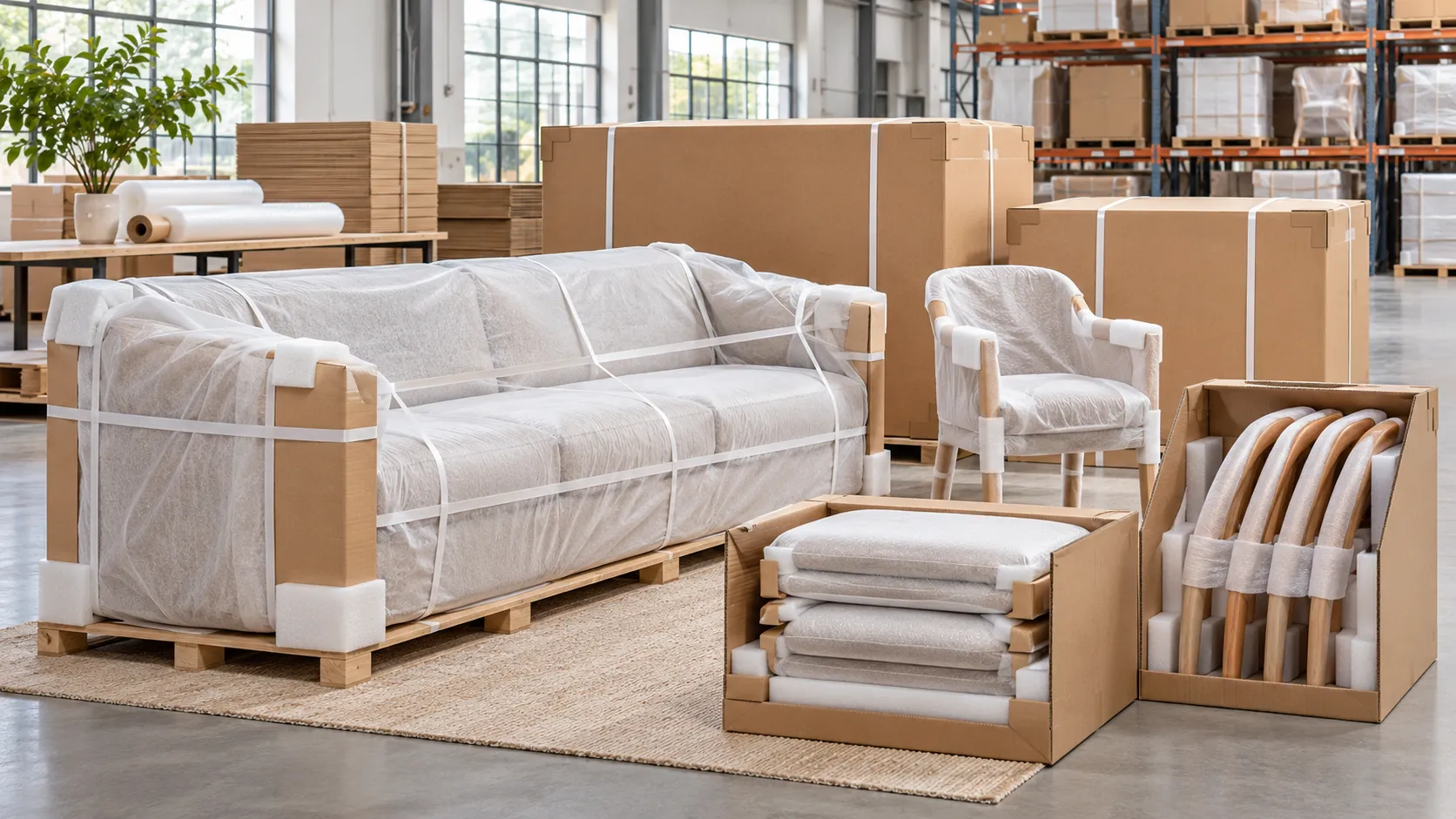
Furniture export packaging should match the structure and vulnerable areas of each product.
Why Does International Furniture Shipping Require Careful Packaging?
During international furniture shipping, a product may be handled several times between the factory and its destination. Cartons can experience vibration, pressure, movement, and contact with other cargo.
Effective furniture cargo protection therefore needs to address three main risks:
-
Surface damage — scratches, rubbing, dirt, or marks on wood, metal, stone, glass, fabric, or painted finishes.
-
Impact damage — dents, chips, cracks, or deformation around corners, edges, legs, and projecting components.
-
Movement inside the package — loose parts colliding with the furniture or the product shifting inside its carton.
Packaging should be designed for the actual product rather than applying one standard method to every item.
What Should Export Packaging for Furniture Include?
1. Surface Protection
Finished surfaces should be separated from abrasive materials and protected from rubbing during transit. Buyers should confirm that the selected wrapping material is compatible with the finish and will not leave marks or residue.
Extra attention may be needed for:
-
Painted or powder-coated surfaces
-
Polished wood and veneer
-
Upholstered panels
-
Glass, stone, and metal components
-
High-gloss or delicate finishes
2. Furniture Corner Protection
Corners and edges are common impact points. Furniture corner protection may use shaped guards, foam, cardboard reinforcement, or other suitable materials according to the product structure.
Buyers should check whether protection is applied to vulnerable areas such as:
-
Tabletop corners
-
Cabinet edges
-
Chair arms and legs
-
Sofa frames
-
Projecting hardware
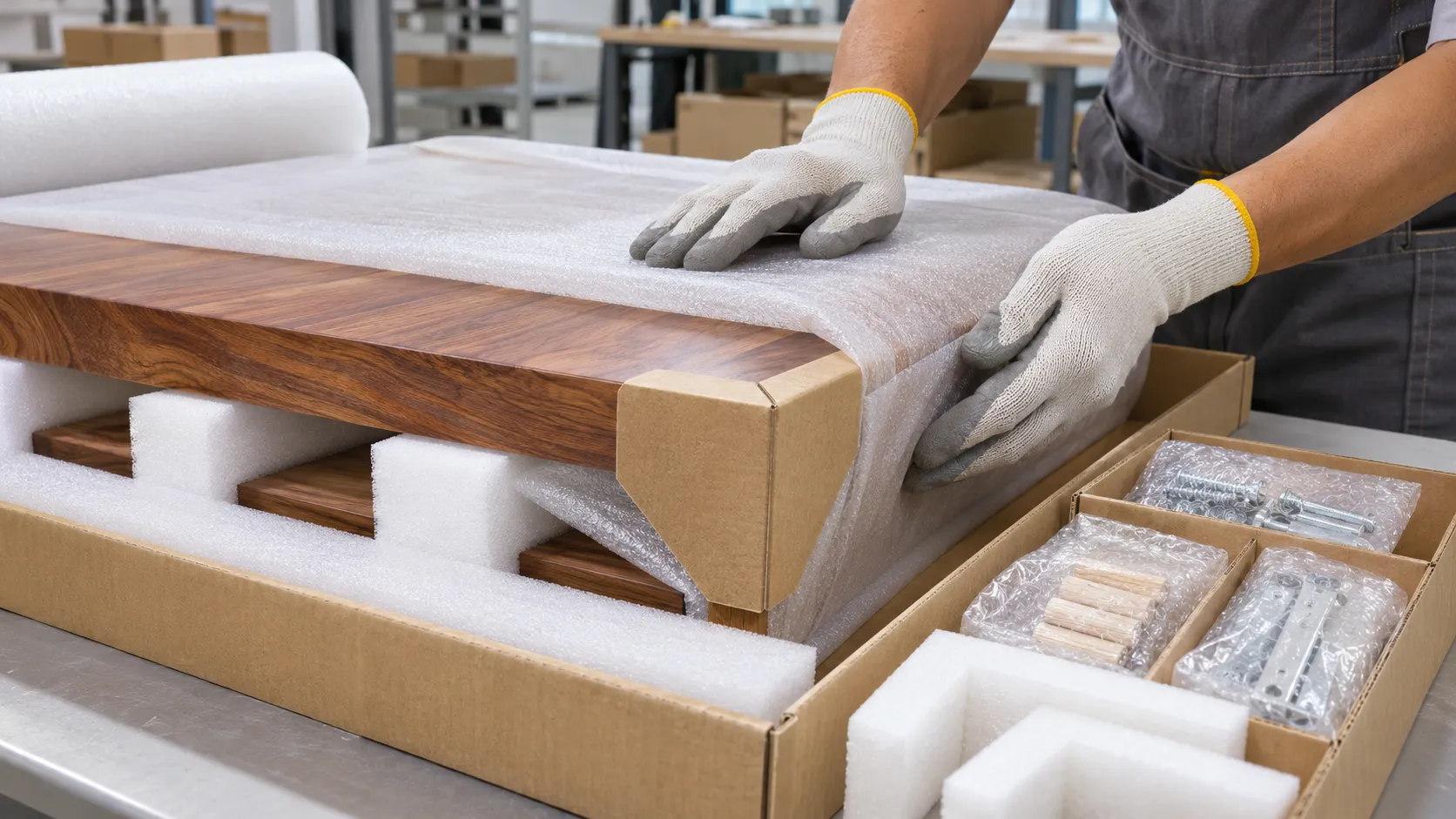 Surface wrapping, corner guards, separators, and individually packed components can reduce contact damage.
3. Separate Component and Hardware Packaging
Removable legs, fittings, screws, tools, and other accessories should be secured so they cannot move freely or scratch the main product. Buyers should also confirm how each package is identified and whether assembly information is included when required.
4. Internal Support and Movement Control
Empty space inside a carton can allow furniture or components to move. Internal supports, dividers, foam blocks, or other restraints should match the shape and weight distribution of the product.
5. Outer Cartons or Crates
The outer package should be selected according to the product, order requirements, handling method, and shipping conditions. Some products may use cartons, while heavier or more vulnerable items may require additional reinforcement or crates.
What Should Buyers Check Before Shipment?
Buyers should request packaging confirmation before container loading. Photos, packaging specifications, or an approved sample package can help both parties align expectations.
| Inspection item | What buyers should confirm |
|---|---|
| Product surface | Fully covered where required; no visible scratches or marks |
| Corners and edges | Vulnerable areas have suitable reinforcement |
| Loose components | Separated, wrapped, secured, and identified |
| Hardware | Complete, protected, and packed with the correct item |
| Internal movement | Product cannot shift excessively inside the package |
| Outer carton or crate | Correct size, condition, closure, and reinforcement |
| Package identification | Matches the product, quantity, and order requirements |
| Loading condition | Packages are dry, undamaged, and arranged securely |
| Photo records | Packaging and loading condition documented before dispatch |
 A pre-shipment check should confirm package condition, closure, identification, and loading readiness.
How Can Buyers Help Prevent Furniture Shipping Damage?
For better furniture shipping damage prevention, buyers should:
-
Share the destination and planned shipping method early.
-
Identify fragile finishes, glass, stone, projecting parts, and other vulnerable areas.
-
Confirm carton, crate, reinforcement, and component-packing requirements in writing.
-
Approve any special packaging before mass packing begins.
-
Request clear photos of the internal protection, sealed packages, and loading process.
-
Verify package quantities and identification against the final packing list.
-
Keep the agreed packaging records with the order documentation.
These steps cannot eliminate every transport risk, but they can reduce misunderstandings and make packaging expectations easier to verify.
How Does SIGMA Furniture Coordinate Export Packaging?
SIGMA Furniture coordinates packaging according to product structure, order requirements, and shipping conditions. Different furniture items may require different surface protection, corner reinforcement, component packaging, cartons, or crates.
Before shipment, buyers can discuss their packaging and documentation requirements with the SIGMA Furniture team so that the agreed solution is confirmed for the specific project.
Contact SIGMA Furniture to discuss furniture packaging, customization, and international project requirements.
Frequently Asked Questions
What is the most important part of furniture export packaging?
There is no single solution for every product. Surface protection, corner protection, internal movement control, component packaging, and a suitable outer package should work together.
Should furniture components be packed separately?
Loose or removable components should be separated and secured when they could move, scratch the product, or become lost during transit.
Are cartons sufficient for international furniture shipping?
It depends on the product structure, weight, vulnerability, order requirements, and shipping conditions. Some products may require added reinforcement or crates.
What packaging evidence should buyers request?
Buyers can request packaging specifications and photos showing internal protection, sealed packages, package identification, and container loading.
Can SIGMA Furniture customize export packaging?
SIGMA Furniture coordinates packaging according to the product structure, order requirements, and shipping conditions. Specific packaging details should be confirmed before shipment.
Related News









Contact US
Product Information
Quantity
Unit
Piece
Support order samples, customization, wholesale direct, and complete payment. If the product you look for does not have corresponding customized content, pls fill out the form below to contact us, and we will reply ASAP.